The first time I read Mormon's cry, "O ye fair ones," I wept. I was 14 and was approaching the end of my first reading of The Book of Mormon. I had grown to love the Nephites. Many had become my heroes. I had been thrilled at the peace, love and prosperity they had experienced after giving their hearts to Christ upon his arrival on this continent. My heart broke as I witnessed their destruction. That process was blessed because that was also the moment that I knew The Book of Mormon was true. I knew that their lives mattered. I knew that their Father in Heaven loved them and wept as well. I knew that the horrible price they paid was a result of their own choices. I shuddered at their dread and hopelessness.
I have made a lot of poor choices since then. I have spent years and years in the bondage of addiction. I have struggled with my desires and my doubts and most of all my fears. Even so, I have never doubted the verity of the experience I had on that day, which first affirmed to me that what I was reading was true and of God. So many times I might have given up had it not been for that glorious affirmation. I might have rejected some points of the gospel, but I could never deny that The Book of Mormon was true. Through it all, the story of the Nephites, their travail and triumph, magnificence and tragedy were an anchor in the storms of my own life. I have read it dozens and dozens of times since then and continued to learn and gain insight, but I am no more certain of its truthfulness today than I was all those years ago.
Thank God that despite my problems, sins and weakness, I was able to hear the voice of the Spirit whisper that sweet assurance to my heart, "It is true."
Sunday, October 3, 2010
Saturday, October 2, 2010
Mormon - Chapter 5
10 And now behold, this I speak unto their seed, and also to the Gentiles who have care for the house of Israel, that realize and know from whence their blessings come.
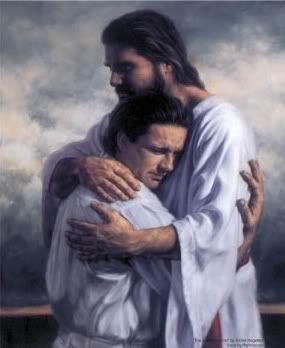
11 For I know that such will sorrow for the calamity of the house of Israel; yea, they will sorrow for the destruction of this people; they will sorrow that this people had not repented that they might have been clasped in the arms of Jesus.Do we realize and know from whence our blessings come? Do we have care for the house of Israel? Do we sorrow for Israel's calamity? If we do not, perhaps we have yet to have the experience of being clasped in the arms of Jesus. If we have been clasped in His almighty, loving, forgiving arms, how can we not desire the same blessing for all of our brothers and sisters.
Friday, October 1, 2010
Mormon - Chapter 4
This chapter contains what I take to be a very important principle:
In the Book of Moses 7:14 we read of Enoch's Zion:
"...it is by the wicked that the wicked are punished..."I believe it is generally safe to assume that fleeing to Zion will spare the vast majority of the righteous from direct physical conflict with their enemies. Meanwhile, the enemies will quarrel, battle and destroy among themselves. Satan does not support his own. He'll destroy anybody, even those whose loyalty seems to be with him.
In the Book of Moses 7:14 we read of Enoch's Zion:
"...so great was the fear of the enemies of the people of God, that they fled and stood afar off..."I expect that the Zion of the Latter-days will be similarly full of faith and similarly protected and cared for. Pretty cool, until you consider how far we have to go, to be so prepared.
Thursday, September 30, 2010
Mormon - Chapter 3
I think it is marvelous our Mormon loved the Nephites. It was an unconditional love that sprang from his love of God. He did not approve of their behavior. He grieved over their lack of faith and humility. He warned them of the danger of the path the trod; even of the consequences that lie ahead in the course they were choosing. But that did not prevent him from loving them. How can that be? I think it is because it was all about them, rather than all about him. Mormon's efforts were not to preserve himself or his lifestyle. Mormon served them because he wanted to preserve and provide means for their happiness.
He didn't attempt to change them, or get even with them when they refused. He simply warned them and let them choose for themselves. We need to follow this example. Too often the rebellion we experience from those we "love" is because we sought to control them, to manipulate them, to change them. It is because we sought to take away their agency. If we love them like Mormon did, we will warn and prepare them, but we will leave the choices to them. Of course that means we are leaving the consequences to them as well and we will soon see that the consequences the Nephites chose were grievous indeed. Still, that is what we must do, if we are to love the Father and truly love His children.
Fortunately, we live in a time when the promise is sure that the gospel will never again be taken from the earth. We can hope that many will not be destroyed. In my work with troubled youth we didn't find many children from active Latter-day Saint families who got into trouble. The rare ones who did, always reported having had one or two controlling manipulative parents. Interesting. Let us love unconditionally, like Mormon did.
Wednesday, September 29, 2010
Mormon - Chapter 2
Slippery possessions.
Now, I don't see this as doom and gloom at all. Just time for a paradigm shift. According to Elder Neal A. Maxwell we don't own anything anyway, that is except our will. I think all of this Latter-day calamity is preparing the righteous to embrace Zion. The time will surely come when we will finally give up the notion of ownership and exchange it for the blessed principle of stewardship. The idea that we own all of this stuff we tend to accumulate is an illusion. It all belongs to God and even if thieves don't steal it, if we cling to possessively to it, God will remove it from us. The great paradox of abundance is that only in giving up ownership are we able to one day possess all that the Father hath.
We who trust the Lord need to alter our vocabulary. We need to exchange the word earned for blessed, the words owned for entrusted, talent for gift, mine for ours and deserve for grace. This may not be easy, because the world had taught us otherwise. Still, the promise is sure, we will be happier and more abundantly blessed if we do.
Now is the time to consecrate our lives. We need not wait for some organization, commandment or structure to be established upon which to hang our Zion hats. We individually, can be part of Zion right now and in so doing, reject what is so clearly bringing destruction upon the Nephites.
"...behold no man could keep that which was his own, for the thieves, and the robbers, and the murderers, and the magic art, and the witchcraft which was in the land."Sounds a lot like today. People losing their homes, their investments, their jobs, their security. And don't think for a minute that there are not secret, Gadianton style, combinations behind much of it. While multitudes lose their grip on the things of the world; self-serving, wicked men are growing in wealth, power and influence by devious means. The decline of our civilization is as literal and real as that of the Nephites.
Now, I don't see this as doom and gloom at all. Just time for a paradigm shift. According to Elder Neal A. Maxwell we don't own anything anyway, that is except our will. I think all of this Latter-day calamity is preparing the righteous to embrace Zion. The time will surely come when we will finally give up the notion of ownership and exchange it for the blessed principle of stewardship. The idea that we own all of this stuff we tend to accumulate is an illusion. It all belongs to God and even if thieves don't steal it, if we cling to possessively to it, God will remove it from us. The great paradox of abundance is that only in giving up ownership are we able to one day possess all that the Father hath.
We who trust the Lord need to alter our vocabulary. We need to exchange the word earned for blessed, the words owned for entrusted, talent for gift, mine for ours and deserve for grace. This may not be easy, because the world had taught us otherwise. Still, the promise is sure, we will be happier and more abundantly blessed if we do.
Now is the time to consecrate our lives. We need not wait for some organization, commandment or structure to be established upon which to hang our Zion hats. We individually, can be part of Zion right now and in so doing, reject what is so clearly bringing destruction upon the Nephites.
Tuesday, September 28, 2010
Mormon - Chapter 1
Talk about a famine in the land:
Reading this chapter drove me to my knees in the deepest gratitude for the abundant gifts that are available, not for any merit of my own, but simply because I believe.
14 And there were no gifts from the Lord, and the Holy Ghost did not come upon any, because of their wickedness and unbelief.I'd rather perish for want of food than to live without the gifts Mormon speaks of here. Perishing physically is one thing, but perishing spiritually is quite another. Without daily gifts from the Lord, I would still be an addict. I would still be in despair. I would be running amok and it is likely that I'd have no regard for my life because I would be so miserable. I that light it is easy to see why the Nephites and Lamanites got on to the slippery slope that ended in such death and destruction. Without the sustaining influence of the Holy Ghost, they simply lacked the resources necessary to sustain happiness and sanity. Being left unto themselves they, struggling, ruined everything for themselves.
Reading this chapter drove me to my knees in the deepest gratitude for the abundant gifts that are available, not for any merit of my own, but simply because I believe.
Subscribe to:
Posts (Atom)

